Vuori's Pricing Strategy: How a $5.5B Brand Positions Against Lululemon, Alo Yoga, and Gymshark
We mapped Vuori's product catalog against Lululemon, Alo Yoga, Gymshark, and Nike — category breakdowns, discount patterns, and the positioning playbook behind the fastest-growing athleisure brand in America.
First: Why Should You Care About Pricing Intelligence?
Pricing is the single highest-leverage decision in DTC — and Vuori proves it
Because pricing is the most powerful and least understood lever in DTC. A 1% price improvement yields an average 11% profit increase, according to McKinsey. Vuori is a masterclass in getting it right — they built a $5.5 billion brand by finding the exact gap between Lululemon’s premium ceiling and Gymshark’s accessible floor. Their “Investment in Happiness” philosophy isn’t just marketing — it’s a pricing strategy disguised as a brand ethos. Here’s what that discipline looks like in practice:
Vuori reached a $5.5 billion valuation in November 2024 — after raising $825 million from General Atlantic and Stripes. This was up from $4 billion just three years earlier when SoftBank Vision Fund 2 invested $400 million. The company has been profitable since 2017 — only two years after founding — making it one of the rare VC-backed DTC brands that doesn’t burn cash.
Vuori grew sales 23% year-to-date in 2024, versus 4.3% for the overall sportswear market. That’s 5x the industry growth rate, driven by premium pricing that customers willingly pay. Their omnichannel approach — DTC e-commerce, wholesale partnerships, and a growing fleet of retail stores — creates multiple touchpoints at consistent price points, backed by a Netlify-powered tech stack.
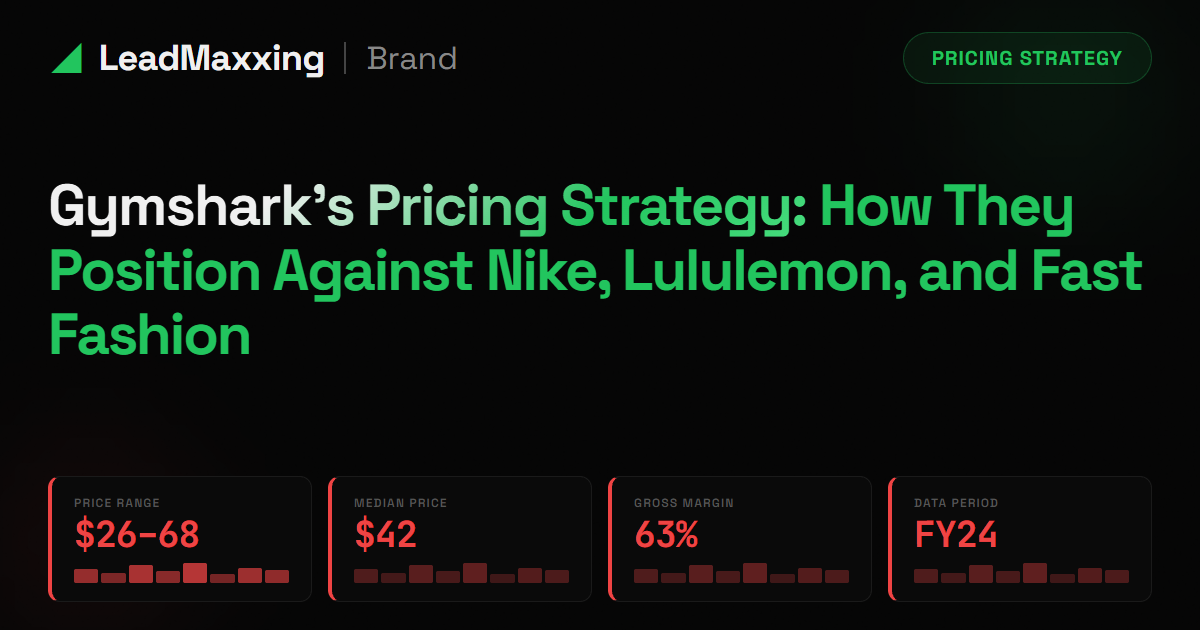
Vuori charges roughly 2x what Gymshark does for comparable products. Core leggings at $88–$118 vs $38–$60. Joggers at $98–$128 vs $42–$68. The perceived quality gap — built through California lifestyle branding, premium fabrics like DreamKnit, and sustainable manufacturing — lets them charge a significant premium over accessible competitors.
Vuori
Lululemon
Alo Yoga
Gymshark
Price Range Analysis
How Vuori clusters its catalog into the $68–$128 premium sweet spot
Vuori’s core range is $68–$128. That’s where the majority of their product catalog clusters. The median product price sits around $88–$98, making it premium enough to signal quality but accessible enough that it doesn’t feel aspirational-luxury. This is deliberate — Vuori found the gap between Lululemon’s premium ceiling and the mass-market floor.
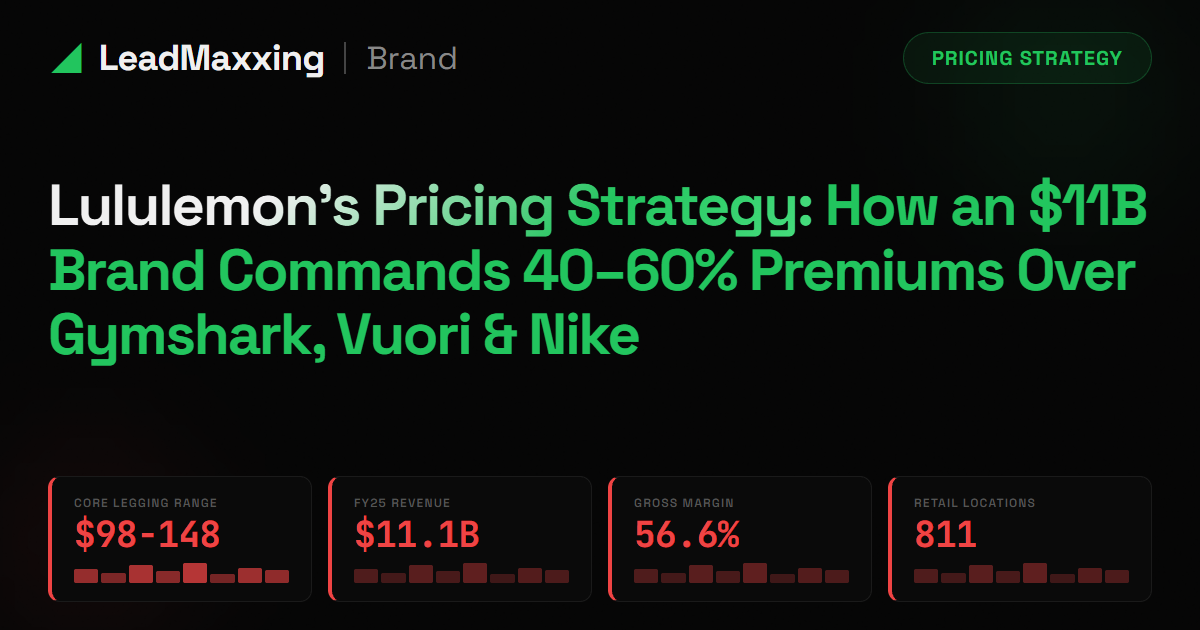
Compare that to Lululemon, where the median product sits above $108 and outerwear regularly hits $200+. Or Gymshark, where the ceiling is $68 and the floor is $26. Vuori deliberately positioned between the two — premium enough for quality perception, accessible enough that you don’t need to justify the purchase.
Source: vuori.com product catalog analysis, March 2026. We estimate percentages represent share of total SKUs in each price band.
We estimate roughly 68% of Vuori products fall between $68 and $128. This tight clustering is intentional — it keeps the brand anchored in the “accessible luxury” zone. They don’t have a $500 puffer jacket pulling the average up (unlike Alo Yoga) or a $20 tank dragging it down (unlike Nike).
This is exactly the kind of pricing intelligence LeadMaxxing generates automatically. Our AI scrapes competitor catalogs, maps price bands, and flags when competitors adjust strategy — see how it works →
Category Breakdown
Joggers, leggings, shorts, tees, and hoodies mapped by price
Joggers are the hero product. The Performance Jogger — Vuori’s signature item that went viral and drove massive early growth — anchors the $98–$128 range. It’s the product that built the brand, and the price point around which everything else orbits.
| Category | Price Range | Core Price | Top Seller Example |
|---|---|---|---|
| Joggers | $98 – $128 | $108 | Performance Jogger |
| Leggings | $88 – $118 | $98 | Clean Elevation Legging |
| Shorts | $68 – $88 | $74 | Kore Short |
| Tops & Tees | $48 – $68 | $58 | Strato Tech Tee |
| Sports Bras | $48 – $68 | $58 | Daily Bra |
| Hoodies | $78 – $134 | $98 | Halo Performance Hoodie 2.0 |
The Kore Short was the original hero. It was Vuori’s first product, designed by founder Joe Kudla after watching surfers in Encinitas wear board shorts to yoga class. At $68–$78, it’s the entry point into the brand. A customer buys a Kore Short, likes the DreamKnit fabric, then moves up to the $108 Performance Jogger. Classic price ladder.
Notice how Vuori’s range within categories is tighter than Nike’s but wider than Gymshark’s. Joggers span $98–$128 (a $30 window), not $42–$68 (Gymshark) or $108–$148 (Lululemon). That consistency builds brand trust — customers know what to expect before they click.
A full Vuori outfit (joggers + tee + hoodie) costs approximately $230–$310. A comparable Lululemon outfit runs $290–$420. That 20–25% gap is Vuori’s value proposition distilled into a single comparison — premium quality at a more approachable price.
Most DTC brands guess at category pricing. LeadMaxxing tracks your competitors’ catalogs daily, flagging new products, price changes, and category shifts before you notice them manually — start free →
Competitor Price Mapping
Vuori vs Lululemon, Alo Yoga, Gymshark, and Nike across every category
Vuori occupies the sweet spot between accessible and luxury. They undercut Lululemon by 15–25% on most categories, price nearly identically to Alo Yoga on core items, sit significantly above Gymshark, and overlap with Nike’s premium tier. That’s a deliberate middle ground.
| Category | Vuori | Lululemon | Alo Yoga | Gymshark | Nike |
|---|---|---|---|---|---|
| Leggings | $88–$118 | $98–$148 | $98–$128 | $38–$60 | $50–$110 |
| Sports Bras | $48–$68 | $52–$72 | $48–$68 | $26–$44 | $30–$55 |
| Shorts | $68–$88 | $58–$88 | $64–$101 | $30–$48 | $35–$65 |
| Hoodies | $78–$134 | $128–$198 | $150–$250 | $42–$50 | $55–$120 |
| Full Outfit* | $230–$310 | $290–$420 | $250–$350 | $90–$130 | $120–$250 |
*Full outfit = leggings/joggers + top + hoodie. Source: Product page scrapes of vuori.com, lululemon.com, aloyoga.com, gymshark.com, nike.com. March 2026.
The Lululemon gap is smaller than you’d expect. On leggings, Vuori’s $88–$118 range vs Lululemon’s $98–$148 represents only a 10–20% discount. But the real divergence is in outerwear — Vuori caps at $134 for hoodies while Lululemon reaches $198. That restraint keeps Vuori anchored in the “accessible luxury” zone.
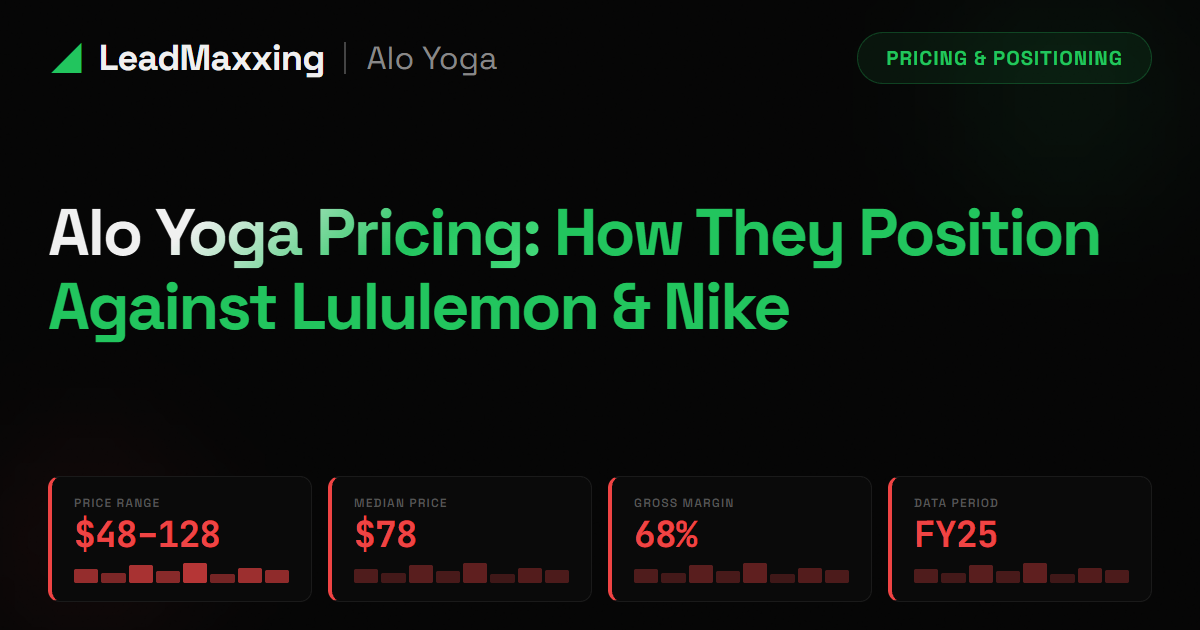
Alo Yoga is the closest pricing peer. On leggings and sports bras, the two brands are nearly identical. But Alo’s outerwear line extends much higher (the $498 Stunner Puffer), creating a wider luxury halo. Vuori’s tighter ceiling is a deliberate choice — it keeps the brand approachable while Alo pushes into fashion-forward luxury.
Track Competitor Pricing Automatically
LeadMaxxing monitors competitor product pages, detects price changes, and alerts you when competitors adjust their strategy. The same intelligence shown above — updated daily, for your brand.
Start free →Discount Strategy
Restrained discounting, V1 loyalty perks, and the 20% welcome offer
Vuori rarely discounts — and that’s the point. Unlike Gymshark’s cultural “Blackout” events or Alo Yoga’s Aloversary sale, Vuori treats discounting as a supporting tactic rather than a marketing moment. They run 2–3 modest sale events per year, maintain a permanent sale section with select markdowns, and protect full-price perception the rest of the time.
Welcome Offer
Black Friday
Seasonal Sales
V1 Community
Annual Discount Calendar
Vuori’s discount strategy is notable for what it doesn’t do. No sitewide 50%+ blowouts. No countdown timers. No constant promo codes. The V1 Community’s 40% member discount is the most aggressive lever — and it requires program enrollment, creating exclusivity rather than eroding brand value. This restraint is why Vuori has been profitable since 2017 while many DTC brands burn cash on acquisition discounts, supported by their measured ad strategy.
The Referral Program: Growth Without Discounting
Instead of broad discounting, Vuori uses a referral program to drive acquisition. Both the referrer and the referred friend get 20% off (with a minimum $150 first order for the friend). This creates a natural price floor — the referred customer has to spend $150+ to activate the discount, ensuring high average order values from day one.
This is the opposite of Gymshark’s approach, where 12–15% student discounts target volume at lower price points. Vuori’s referral requires commitment — $150 minimum — which filters for their target customer: someone who values quality and is willing to invest, amplified by their social media community.
Market Positioning
Where Vuori sits on the premium-to-value spectrum and why it works
Vuori occupies the “accessible luxury” niche in athleisure. They’re not competing with Lululemon on yoga heritage or Alo Yoga on celebrity culture. They’re competing on lifestyle versatility — the idea that one pair of joggers works for the gym, the coffee shop, and a flight. The price supports that positioning: premium enough to feel like an investment, accessible enough that you don’t agonize over the purchase.
Source: Product page scrapes of vuori.com, lululemon.com, aloyoga.com, gymshark.com, nike.com. March 2026. Full outfit = leggings/joggers + top + hoodie.
The Positioning Playbook
Target Audience
Est. Revenue
Valuation
Omnichannel
Vuori’s brand positioning rests on four pillars:
- California Lifestyle: Born in Encinitas — surfing, yoga, outdoor culture baked into every product. The brand identity is location, not aspiration.
- Versatility: “Studio to street” is Lululemon’s claim, but Vuori built it into the product DNA — joggers that work at the gym, on a plane, or at dinner.
- Investment in Happiness: Not just a tagline. Vuori’s brand philosophy centers on employee wellbeing, community engagement, and authentic purpose.
- Sustainability: Eco-friendly materials, responsible manufacturing, and a commitment to reducing environmental impact.
Vuori doesn’t compete on price — they compete on lifestyle. Their pricing supports this: high enough that wearing Vuori signals you care about quality and versatility, low enough that the brand feels approachable rather than aspirational. The price IS the brand statement — and it’s why they’ve been profitable since year two while competitors, as covered in our PR & media analysis, continue to chase growth at the expense of margins.
Key Findings
- → We estimate roughly 68% of Vuori products fall between $68 and $128, anchoring the brand in the “accessible luxury” zone — 15–25% below Lululemon but 2x Gymshark’s price point
- → Vuori reached a $5.5 billion valuation in November 2024 (verified fact, Retail Dive) after raising $825 million from General Atlantic and Stripes, while maintaining profitability since 2017
- → The Performance Jogger at $98–$128 is the viral hero product that built the brand, pricing nearly identically to Alo Yoga ($108–$138) but below Lululemon ($108–$148)
- → Vuori runs only 2–3 major sale events per year at 20–40% off — the most restrained discount strategy among major athleisure brands, protecting premium perception
- → Sales grew 23% year-over-year in 2024 (verified fact, CNBC) versus 4.3% for the overall sportswear market, with plans to surpass 100 stores worldwide by end of 2026
What This Data Means for You
Turning Vuori's pricing playbook into your competitive advantage
If you’re a DTC brand, Vuori’s pricing strategy is a masterclass in restraint and positioning. Their tight $68–$128 core range, disciplined discounting, and “accessible luxury” positioning are repeatable tactics you can adapt. Study their SEO & content strategy to see how they drive organic traffic at these price points, and their tracking setup to understand how they measure conversion at premium prices.
LeadMaxxing Automates Competitor Price Monitoring
The pricing intelligence in this report took weeks to compile manually. LeadMaxxing scrapes competitor product pages, maps price bands, flags price changes, and benchmarks your positioning — updated weekly for your brand. Plans start at $29/month.
Try competitor price tracking →5 Things You Can Implement Today
Actionable lessons from Vuori's pricing playbook
Find the gap between premium and accessible
Vuori doesn’t try to be cheapest or most expensive. They found the 15–25% discount vs Lululemon sweet spot. LeadMaxxing maps your competitors’ price bands so you can find your own gap.
Build a hero product at your target price point
The Performance Jogger at $108 became Vuori’s anchor. Every other product orbits that price. LeadMaxxing tracks which competitor products drive the most engagement at each price tier.
Protect full-price perception with restrained discounting
Two to three sales per year beats weekly promo codes. Vuori’s profitability since 2017 proves this works. LeadMaxxing alerts you when competitors launch sale events so you can time yours strategically.
Use referrals with minimums instead of broad discounts
Vuori’s referral program requires a $150 minimum order — filtering for high-value customers from day one. LeadMaxxing tracks competitor referral and loyalty programs to benchmark your own.
Supercharge Your Leads with LeadMaxxing
Get a free LeadMaxxing account and start supercharging your leads. Start free →
Get This Analysis For Your Brand FREE
When You Create A Free LeadMaxxing Account
Create a free LeadMaxxing account and we'll generate a full competitive analysis for YOUR brand. The same intelligence you just read — comparison with competitors, actionable strategies, and AI-powered recommendations.
More Vuori Intelligence





Pricing & Positioning for Similar Brands
Frequently Asked Questions
How much do Vuori joggers cost?
Is Vuori cheaper than Lululemon?
How does Vuori compare to Alo Yoga on price?
Does Vuori run sales or discounts?
What is Vuori's pricing strategy?
What is Vuori's valuation and revenue?
What is Vuori's most expensive product?
How does Vuori position against premium vs. budget competitors?
Sources & References
vuori.com
retaildive.com
cnbc.com
fastcompany.com
businesswire.com
lululemon.com · aloyoga.com · gymshark.com
mckinsey.com