Page History

13 Years of Gymshark: 4,285 Snapshots From Garage Startup to $1.4B Brand

Every Wayback Machine snapshot of gymshark.com from 2012 to 2026 — explore any year and see how a garage startup iterated its way to a billion-dollar brand.

Data as of March 17, 2026 4 platform migrations 13 years tracked
Listen to this article
0:00 / 0:00
13
Years tracked
4
Platform migrations
60+
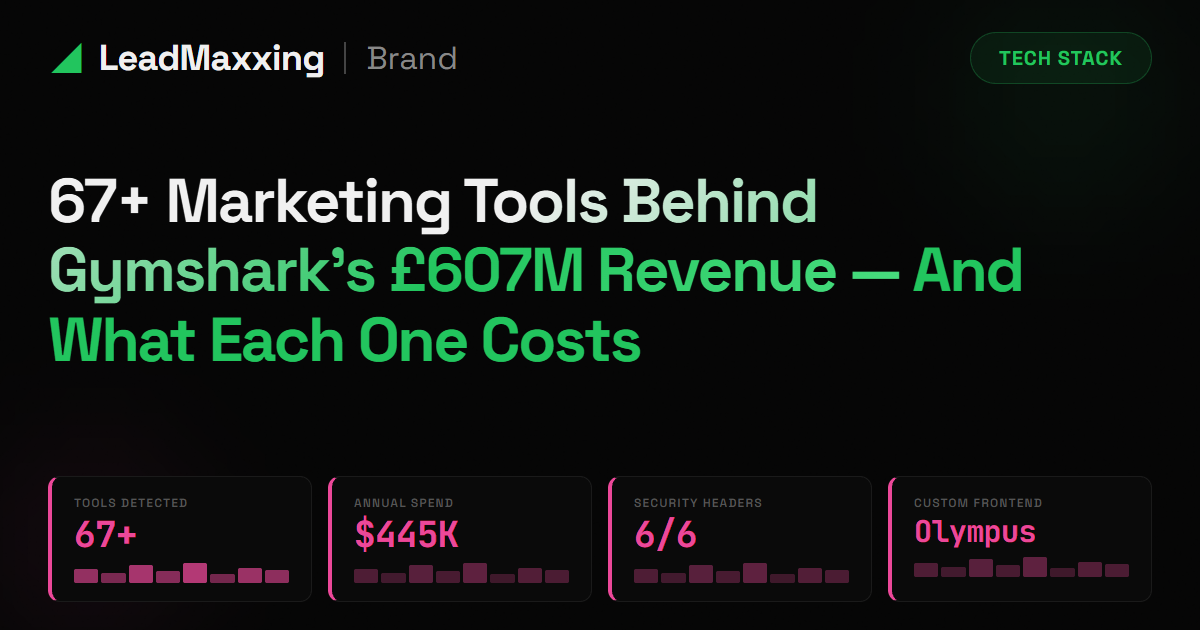
Marketing tools detected
1000x
Revenue growth

Why Track How Brands Rebuild Their Websites?

Replatforming is the most expensive, highest-risk decision in ecommerce. Brands that time it right unlock their next revenue tier. Brands that don't lose millions in a single weekend. Gymshark did both — and their 13-year homepage archive is a free masterclass in when to migrate, what breaks when you wait too long, and what the right stack looks like at every revenue stage:

4

Gymshark has gone through 4 major platform migrations — from basic Shopify to Magento to Shopify Plus to a custom headless Next.js stack. Each migration was triggered by hitting a ceiling the previous platform couldn't break through.

-$1M

Gymshark's Black Friday 2015 crash reportedly cost them over a million in lost sales during the outage. Their Magento site buckled under traffic. This one incident triggered the entire migration to Shopify Plus — proving that the cost of the wrong platform is measured in lost revenue, not hosting fees.

100K+

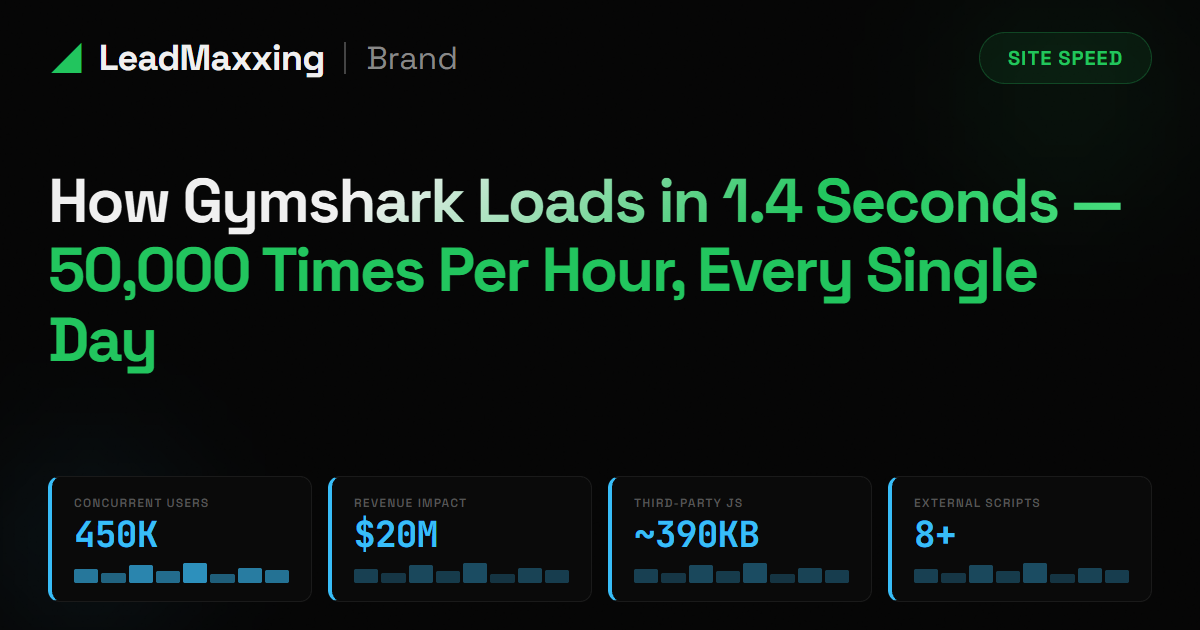
Gymshark's current stack handles hundreds of thousands of concurrent users on peak days (per Shopify Plus case study). Their headless architecture (Next.js + Shopify backend) is what made this possible — and it's the same pattern that Allbirds, Glossier, and other DTC leaders have adopted.

Explore Any Year
Click a year to load the archived homepage
Loading Gymshark.com from the Wayback Machine…
2013 — The Garage Days. Ben Francis was 19, sewing gym clothes in his parents' garage. Basic Shopify theme, small catalog. ~$500K annual revenue.
Open on Wayback Machine — December 2013

Four Platform Migrations

How Gymshark outgrew four platforms in 13 years

Most brands sit on one platform for a decade. Gymshark migrated four times in 13 years — each jump unlocking the next revenue tier. Their tech stack grew from a basic Shopify theme to 60+ enterprise tools, and the homepage tells the story.

Shopify Starter
$500K
2012–2014
  • StackShopify
  • Team2 people
  • StrategyProduct grid
Influencer Growth
$10M+
2015–2017
  • StackShopify Plus
  • ShiftAthlete-led
  • StrategyContent feed
Custom Platform
$300M+
2018–2021
  • StackOlympus
  • ShiftHeadless
  • StrategyPersonalization
Enterprise Scale
$500M+
2022–2026
  • StackOlympus v2
  • Tools60+
  • StrategyAI/server-side

The Full Timeline

Every major homepage change from 2012 to 2026

2012
Year zero. Ben Francis registers gymshark.com. Screen printing in a garage in Birmingham. First Shopify store goes live with a handful of stringers.
2013
Default Shopify theme. Basic product grid, no hero imagery. Small catalog of stringers and hoodies. The homepage is essentially a product listing page. ~$500K rev
2014
BodyPower expo breakthrough. Sold out in 30 minutes. Homepage still basic but catalog growing. This is where brand awareness outpaces the website — a common DTC growing pain.
2015
Influencer era begins. Nikki Blackketter, Lex Griffin, David Laid. Homepage shifts from product grid to athlete-led hero imagery. Rotating features, product drops, seasonal campaigns. The homepage becomes a marketing channel — a shift mirrored in their social media strategy. Influencer push
2016-17
Infrastructure transition. Revenue crosses $100M. The Shopify theme can't keep up — they begin building custom tooling. Homepage content changes almost daily: new athlete features, product launches, campaign rotations. $100M+ rev
2018
Custom "Olympus" platform goes live. Headless architecture: custom React frontend, Shopify Plus checkout only, CloudFront CDN. Complete control over speed and A/B testing.
2019
Enterprise personalization stack adopted. DynamicYield + mParticle ($150K+/yr). Real-time product recommendations, A/B testing at scale. The homepage starts showing different content to different visitors.
2020
COVID pivot. Gym closures force a content strategy shift — at-home workout content, community focus. Braze cross-channel messaging goes live. Digital-first marketing intensifies, with ad spend spreading across 6 platforms. $1.3B valuation
2021
Peak complexity. 60+ marketing tools detected in CSP header. 6 ad platforms running simultaneously. Homepage personalized by geography, gender, and browsing history — fueling their SEO and content engine.
2022-24
Server-side optimization era. Visible changes slow down because testing moves server-side via DynamicYield. Checkout optimization, mobile-first redesign, geo-targeted collections. The changes are happening — just invisible to source code.
2025-26
Current state. Full headless Olympus v2 stack. Shopify Plus checkout. CloudFront global CDN. 6/6 security headers. $500M+ annual revenue. The garage Shopify store is unrecognizable. See the full tech stack →

Key Findings

  • → Gymshark has undergone 4 major platform migrations in 13 years, from a basic Shopify store to a custom headless architecture called Olympus that handles massive Black Friday traffic.
  • → A single Black Friday crash in 2015 reportedly cost Gymshark over a million in lost revenue and triggered their migration from Magento to Shopify Plus.
  • → During their peak growth year in 2017, Gymshark's homepage content changed almost daily — a frequency 10x higher than the average DTC brand.
  • → Gymshark's current tech stack includes 60+ marketing tools identified through CSP header analysis, with an estimated annual SaaS spend exceeding $150K.
  • → Every major revenue milestone ($500K → $10M → $300M → $500M+) was preceded by a platform migration, suggesting infrastructure investment directly correlates with growth.

What This Data Means for You

Turning Gymshark's evolution into your competitive advantage

Gymshark had designers and developers pushing homepage updates by hand — every day in 2017. Today, tools like LeadMaxxing scrape competitor pages, extract brand colors and fonts, generate landing pages from that data, and run autonomous A/B tests. Winners auto-apply at 95% statistical significance. No developer required.

LeadMaxxing Automates This Entire Playbook

Our tracking script captures every visitor interaction — page views, scroll depth, form submissions, click paths. AI reads behavioral data to generate landing page variants and runs A/B tests automatically. When a variant wins at 95% significance, it auto-applies. What took Gymshark a design team and daily manual updates, LeadMaxxing does for $29/month.

Try autonomous A/B testing →

5 Things You Can Implement Today

Actionable lessons from Gymshark's homepage playbook

Rotate homepage content weekly, not quarterly

Gymshark changed their homepage daily during peak growth. If your hero has been the same for 30+ days, you're leaving data on the table. LeadMaxxing auto-generates page variants from your existing content — swap hero images, CTAs, and featured products without touching code.

A/B test every change, not just big redesigns

Gymshark treated their homepage as a testing surface, not a static page. LeadMaxxing runs autonomous A/B tests on every variant — winners auto-apply at 95% statistical significance. 2 variants per week = 100+ data points per year.

Know your platform ceiling before you hit it

Gymshark hit their ceiling on Black Friday — the worst possible day. LeadMaxxing monitors your site performance under load and flags infrastructure bottlenecks before they cost you revenue.

Spy on competitor homepage changes in real time

When a competitor starts changing their homepage weekly, they're testing something. LeadMaxxing tracks competitor page evolution automatically — scraping layouts, extracting patterns, and alerting you to strategic shifts.

Supercharge Your Leads with LeadMaxxing

Get a free LeadMaxxing account and start supercharging your leads. Start free →

Free — No credit card required

Get This Analysis For Your Brand FREE
When You Create A Free LeadMaxxing Account

Create a free LeadMaxxing account and we'll generate a full competitive analysis for YOUR brand. The same intelligence you just read — comparison with competitors, actionable strategies, and AI-powered recommendations.

Auto-generated brand report Competitor comparison Strategy recommendations AI-powered insights Free LeadMaxxing account to supercharge your leads
Get Free Report + Account → Free plan includes visitor tracking, lead scoring, and AI chat. Paid plan $29/month for full access.

Frequently Asked Questions

What platform does Gymshark use for their website in 2026?
As of 2026, Gymshark runs a custom headless architecture called "Olympus v2." The frontend is a custom React/Next.js application, while Shopify Plus handles only the checkout. CloudFront serves as their global CDN, and they use over 60 third-party marketing tools including DynamicYield for personalization and mParticle for customer data. The setup handles hundreds of thousands of concurrent users during peak sales events.
Why did Gymshark leave Shopify for a custom platform?
Gymshark outgrew Shopify Plus around 2017–2018 when they crossed $100M+ in annual revenue. The standard Shopify theme couldn't support their personalization needs, A/B testing velocity (near-daily homepage changes), or international expansion requirements. They built Olympus — a headless platform separating the React frontend from Shopify's checkout — giving full control over speed, testing, and personalization.
What happened during Gymshark's Black Friday crash?
During Black Friday 2015, Gymshark's Magento-based website went down under traffic, reportedly costing them over a million in lost sales during the outage. This single incident triggered their migration to Shopify Plus and remains one of the most cited examples in ecommerce of why infrastructure scaling matters — the cost of the wrong platform is measured in lost revenue, not hosting fees.
How often does Gymshark update their homepage?
During peak growth in 2017, Gymshark changed homepage content almost daily — roughly 10x more than the average DTC brand. Since adopting server-side personalization via DynamicYield in 2019+, many changes are invisible to standard monitoring because different visitors see different page versions in real-time.
What is Gymshark's Olympus platform?
Olympus is Gymshark's custom headless ecommerce platform launched in 2018. The React/Next.js frontend is decoupled from Shopify Plus (checkout only). Their CNAME record (ingress.olympus.gymsharkapps.io) confirms the custom infrastructure. It gives full control over page speed, A/B testing, personalization, and international markets that standard Shopify couldn't deliver.
How does Gymshark's website compare to Alo Yoga, Vuori, and Lululemon?
Gymshark's stack is significantly more complex. Alo Yoga and Vuori typically run standard Shopify Plus with 15–25 tools; Gymshark uses 60+ across advertising, personalization, analytics, and infrastructure. Their custom headless architecture is closer to Nike's digital setup than typical DTC. The tradeoff: estimated $150K+/year SaaS spend vs. $5K–$15K for a typical Shopify Plus store.
At what revenue should a DTC brand migrate off Shopify?
Gymshark's data suggests the trigger is when your platform bottlenecks growth — not a revenue number. They migrated when they needed visitor-level personalization, high-velocity A/B testing, custom international checkout, and page speed control. Most DTC brands below $50M don't need custom. Maximize Shopify Plus with headless tools like Hydrogen before committing to a full build.
How did Gymshark grow from a garage to $500M+ revenue?
The website tells the story: (1) 2012–2014: Basic Shopify, ~$500K, built on YouTube fitness influencers. (2) 2015–2017: Influencer marketing at scale (Nikki Blackketter, David Laid), homepage as content channel, $100M+. (3) 2018–2021: Custom Olympus platform enables personalization at scale, $1.3B valuation. (4) 2022–present: 60+ tools, server-side optimization, $500M+ annual. Each platform migration unlocked the next revenue tier.

Sources & References

Wayback Machine / Internet Archive — 4,285 archived snapshots of gymshark.com from 2012 to 2026, used to reconstruct the full homepage evolution timeline.
web.archive.org
BuiltWith Historical Data — Technology stack tracking for gymshark.com, including platform migrations, marketing tools, and third-party script adoption over time.
builtwith.com
Gymshark Ltd — Companies House Filings — UK company filings confirming revenue milestones, valuation data, and corporate structure referenced in the growth timeline.
company-information.service.gov.uk
Shopify Partner Announcements — Official Shopify Plus case study documenting Gymshark's migration from Magento after the 2015 Black Friday crash.
shopify.com
Wayback Machine & Page Monitoring — Historical homepage snapshots sourced from web.archive.org, combined with CSP header analysis, third-party tool detection, and infrastructure fingerprinting.
web.archive.org
Compiled by LeadMaxxing using Wayback Machine data. We track how brands build, test, and optimize their marketing.